
Hidden Object Games
Sharpen your observation skills hunting items concealed in detailed scenes. Hidden-object games are the slow cinema of puzzling — unhurried, atmospheric and quietly addictive.
How hidden object games work
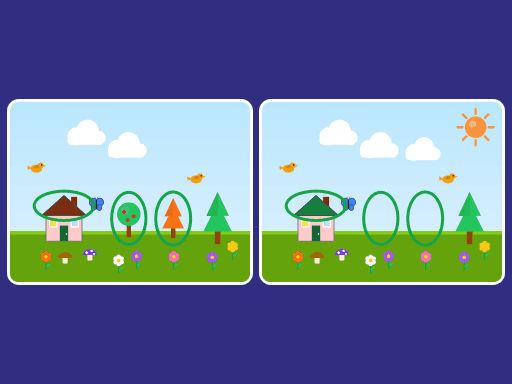
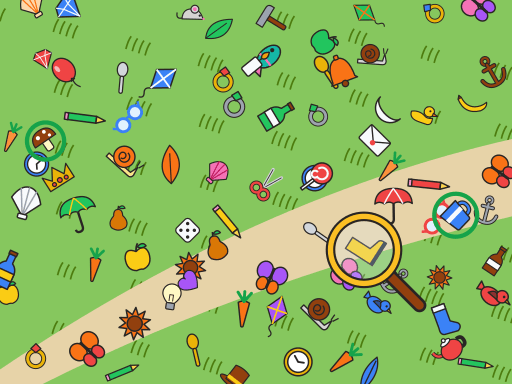
Hidden object games are about looking carefully. The most common style shows you two nearly identical pictures and asks you to find every difference between them: a missing button, a changed colour, an object moved a little to one side. Others hide a list of items inside a single busy scene, or ask you to count how many of something appear. None of them needs fast reflexes; they need attention.
That makes them unusually calm games. There is rarely a penalty for taking your time, and the reward comes in small, frequent moments, since every difference you spot is a little piece of progress.
Techniques that find more
Search systematically rather than letting your eyes wander. Divide the picture into quarters or a rough grid and search one section at a time, comparing the same area in both images before moving on. People naturally look at faces and bright objects first, so differences are often hidden at the edges, in the background and in the dull parts of a scene.
Look for kinds of change rather than particular objects. The common differences are something added or removed, a change of colour, a change of size, an object flipped or rotated, and a line that is slightly longer or shorter. Keeping that list in mind helps you notice changes that don't jump out at you.
When you are stuck on the last one or two, look away for a moment and come back. Fresh eyes catch what staring misses, which is why the final difference so often appears the instant you stop searching for it.
If the game offers a zoom, use it on the busiest parts of the picture, where small changes are hardest to see. Save any hints for the very end: a hint used early shows you one difference but teaches you nothing about where the others tend to hide.
Why people enjoy them
Spot-the-difference puzzles use visual attention and short-term visual memory: you hold one image in mind while you study the other. It is the same careful, methodical attention you use when proofreading a document or checking work for mistakes, and because each puzzle is short, it fits easily into a spare few minutes. If you enjoy the close observation, the memory games build on the same skills.